
Oxylabs: From a 17-Square-Metre Office to a Global Industry Leader
The story of Oxylabs began with a simple question: a friend working in data collection asked whether the team knew where unused IP addresses could be rented. According to Oxylabs CEO Juras Juršėnas, that question became the starting point for a company that is now recognised as one of the global leaders in data analytics and web intelligence.
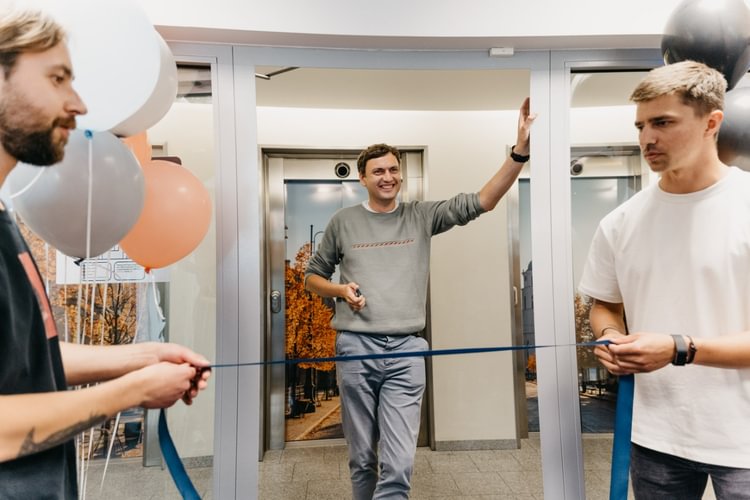


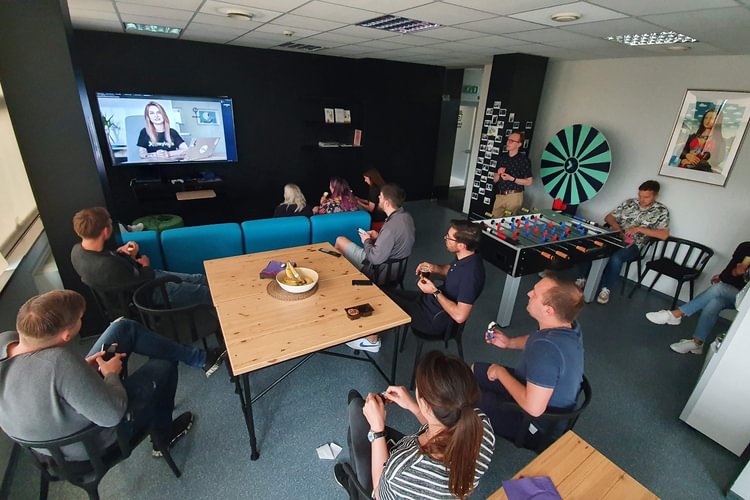
“In Vilnius, we find a great deal of intellectual curiosity – and that is precisely the driving force behind our technological leadership,” says Juras Juršėnas. Lithuania’s strong traditions in mathematics, engineering and computer science provided a solid foundation for technological breakthroughs, while the city’s close-knit technology community encouraged collaboration rather than competition. “We take the same approach ourselves – we actively support our colleagues in the tech community and openly share our knowledge,” says Juras.
According to him, Vilnius’ open business culture enabled Oxylabs to quickly build a high-level team of data engineering and cybersecurity specialists. Lower operating costs compared with Western Europe also allowed the company to invest more in talent and product development.
Although Oxylabs had global ambitions from the very beginning, a key milestone came when the company secured its first Fortune 500 client and delivered the project from Vilnius. This proved that global success could be built here – in a city where strong ideas are supported by a modern and forward-looking business environment.
“Just yesterday we were looking toward the major cities known as the world’s technology capitals. Today, Vilnius-based companies themselves have become global stars”- Juras Juršėnas
First Steps and the Role of the Ecosystem in Vilnius
Oxylabs was born in the Tesonet accelerator – the epicentre of Vilnius’ technology ecosystem. Officially established in 2015, the company’s first steps were extremely modest: a few people in a 17-square-metre office and a single product: data centre proxies. At the time, the public web data collection industry was still taking shape, which meant there was no handbook to follow, as Juras Juršėnas recalls.
At an early stage, when many companies were only beginning to look towards foreign markets, Oxylabs was already building global solutions. In a short period of time, the Vilnius-based team grew from 10 to 50 people, then to 100, and today it has more than 500 employees. This growth was supported by a strong local talent base. “In Vilnius, we consistently found high-quality specialists in technical, marketing, business development and other fields,” says Juršėnas.
From the very beginning, the Vilnius business community played an important role. “Most founders here do not simply know each other – they are friends. If someone has already solved a problem you are facing, you can simply ask them,” Juras says, highlighting what makes Vilnius unique. This openness and culture of knowledge sharing became one of the key factors that helped Oxylabs mature quickly.
Today, Juras acknowledges that Vilnius has made impressive progress. “Just yesterday we were looking toward the major cities known as the world’s technology capitals. Today, Vilnius-based companies themselves have become global stars,” he says. When Oxylabs began its journey, Vilnius was favourable for startups but was still searching for its place on the global stage. “Back then, we had a vision that we would find a seat at the global technology table. Now we realise that Vilnius is a place where you can build that table yourself.”


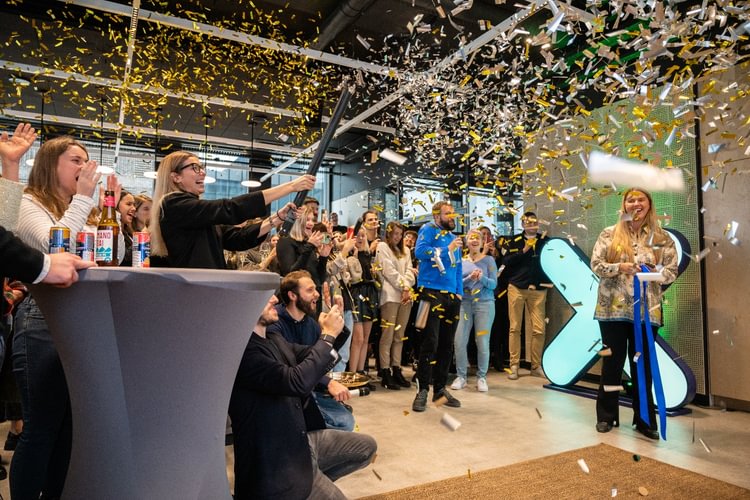
Challenges and Solutions
From the very beginning, Oxylabs has operated in a highly dynamic and still-evolving industry – public web data collection – where regulatory conditions, technological standards and public attitudes towards data access are constantly changing. The challenges the company faced were not determined by its location, but by the nature of the industry itself. “It is a very dynamic industry in which legislation is constantly trying to catch up with innovation, not the other way around,” says Juras Juršėnas.
One of the most important issues was the lack of clear regulatory guidance. To ensure ethical data collection while operating at the intersection of technology and law, Oxylabs strengthened its legal expertise. “Today, we can confidently say that our legal team is one of the most experienced international technology law teams in Lithuania,” says Juršėnas.
Another challenge was that public web data collection had long been misunderstood. Oxylabs therefore took the initiative to change this perception and educate the market about the ethical use of data. “A large part of our journey has been about educating the public on why public web data matters and how it can be used responsibly,” the CEO says. The company consistently created content, published articles and organised webinars and lectures for both businesses and the academic community.
This educational work eventually evolved into broader industry leadership. In 2022, Oxylabs became one of the co-founders of the Ethical Web Data Collection Initiative. The association aims to establish clear ethical guidelines for the entire industry and help companies operate in a complex international legal environment. In doing so, it also positions Lithuania’s technology community as a leader in ethics and innovation within the sector.
Growth
In less than a decade, Oxylabs has grown from a small startup operating in a modest office of just a few dozen square metres into one of the global leaders in its industry. Profitable from its earliest days, the company now operates in more than 100 countries and serves over 4,000 clients.
While the team initially consisted of only a few people, today Oxylabs brings together more than 500 professionals working with advanced data processing, artificial intelligence and cybersecurity technologies. What began as a single product has evolved into a full ecosystem of solutions that enable companies to use public web data ethically and efficiently.
Innovation has become a cornerstone of the company’s growth. Today, Oxylabs holds more than 100 patents and is considered one of Lithuania’s leading investors in research and development.
“We have grown in every sense – by attracting larger clients, developing increasingly advanced products and expanding our team. As a company, we have also reached a new level of maturity,” says Juras. This growth represents not only a major increase in scale, but also a leap in trust – from the company’s first small, innovative clients to partnerships with global corporations. It demonstrates that a technology company based in Vilnius can meet the highest standards of reliability and compliance.
This transformation is more than a business growth story. It is also proof that Vilnius has become a place where global technological breakthroughs are born, developed and used to shape the direction of an entire industry.
Vilnius – the Heart of Our Innovation
Today, Oxylabs is one of the leading global technology companies in its field. For three consecutive years, from 2022 to 2024, it was recognised by the Financial Times as the fastest-growing European company in the public web data collection sector.
However, the company is proud not only of its growth and the innovations that help shape industry standards, but also of the values behind its work. “We are most proud to be ambassadors of ethical public web data collection,” says one of Oxylabs’ executives. This
values-based approach is further strengthened by the open culture of collaboration that has developed within Lithuania’s technology ecosystem. Oxylabs actively contributes to this ecosystem by sharing ideas, experience and knowledge with other Lithuanian technology companies.
Looking ahead, the company plans to continue growing in Vilnius by strategically deepening its existing functions. CEO Juras Juršėnas says with pride: “Vilnius is not just part of our global strategy – it is its indispensable heart. This is where our headquarters, our global R&D centre and the cultural centre of the entire company are located.”
Although Oxylabs operates globally today, its identity is inseparable from the place where the company originated. “Everything we have achieved over these years began in Vilnius. And we are convinced that everything we will achieve in the future – our next innovations, new stages of market leadership, and the next generation of leaders – will be created and led from here.”