
Vilnius Launches the World's First Emotion-Backed Currency
Vilnius becomes the first capital to tokenize emotions – turning childhood Christmas memories into a redeemable city currency.

Vilnius has launched Europe’s first emotion-based city currency, inviting residents and visitors to reflect on their childhood Christmas memories for a limited-run note redeemable at 40 local businesses. The initiative blends soft economic stimulus with a public demonstration of how trust, sentiment and collective memory form the basis of value.
The programme, issued exclusively on December 13th, the “Vilnius Christmas-before-Christmas” day of the year, was designed both to lift holiday-period foot traffic and to reframe debates around the nature of money at a time when European policy discourse is dominated by digital currency pilots and programmable payments.
“Currency has always been a story of trust,” said Gediminas Šimkus, Chairman of the Board of the Bank of Lithuania. “Today we showed that even a childhood memory can become ‘currency’ when a community agrees on its meaning. It is a festive, human reminder of the trust that underpins all modern financial systems.”
A live demonstration of sentiment as value
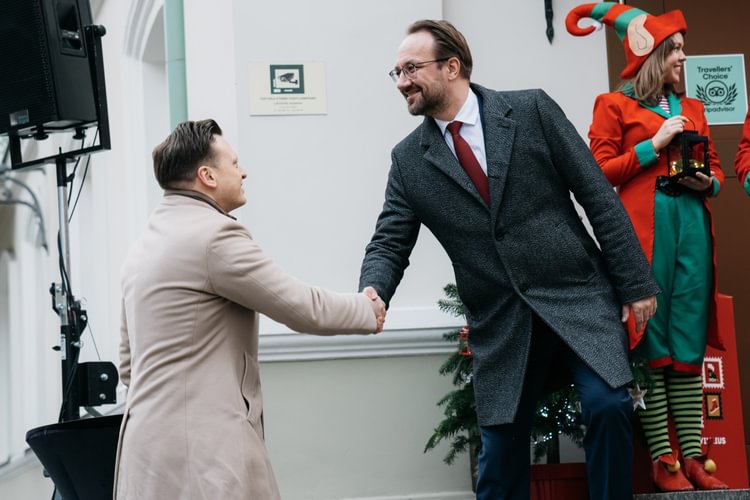
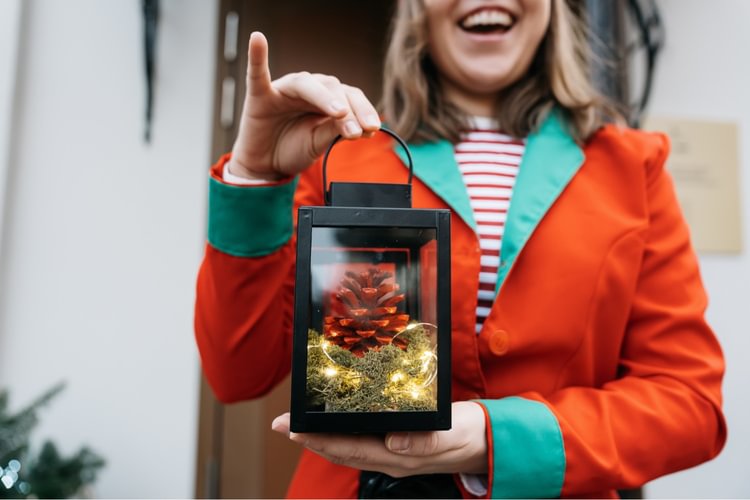
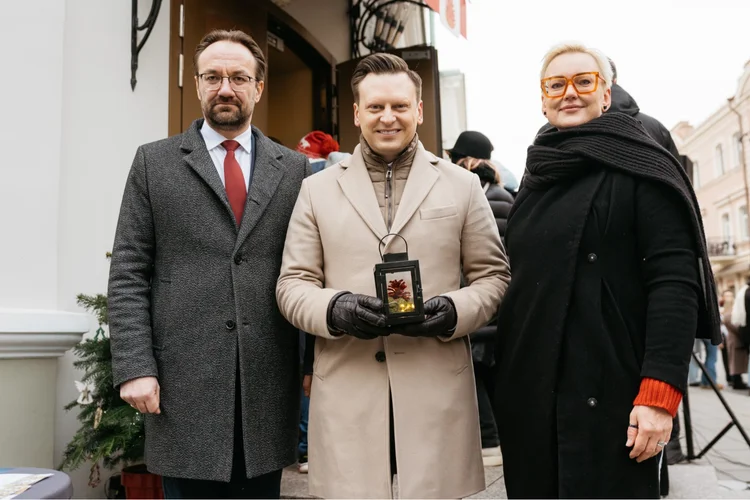
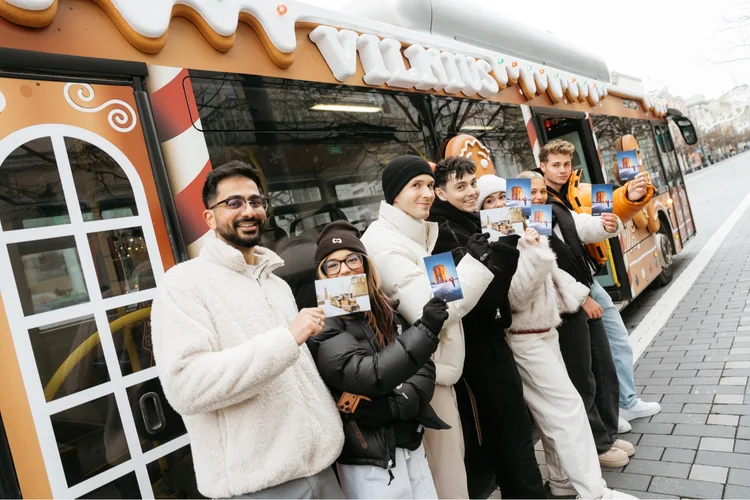
The launch took place outside the Bank of Lithuania’s Money Museum, where the “Gingerbread Bus” delivered the Mayor Valdas Benkunskas and a choir to the ceremony. The Governor of the Bank of Lithuania then staged the ceremonial “first minting,” during which the inaugural note was formally handed to the mayor, symbolically marking the currency’s entry into circulation. The first units – issued in the form of pinecones – served as a symbolic nod to the ‘currencies’ of childhood and a reminder that currency, even in its most sophisticated forms, remains a cultural construct grounded in shared belief.
Throughout the day, residents and visitors filled exchange points across the city – from the Money Museum to Christmas market sites – where childhood memories were swapped for the new festive currency. Soon after, the notes were circulating across dozens of partner businesses.
From memory to money: how Vilnius merges culture and economic strategy
Vilnius, which holds the title of Europe’s Christmas Capital in 2025, positioned the project as part of a broader strategy to use narrative, emotion, and experiential design as tools of soft economic power.
“Cities compete increasingly through the stories they tell and the experiences they create,” said Dovilė Aleksandravičienė, CEO at Go Vilnius, Vilnius tourism and business development agency. “By converting memories into a form of value, Vilnius showed that emotional connection can be part of a modern economic strategy – not a substitute for monetary policy, but a complement to it.”
Beyond its festive acclaim, Vilnius is also one of Europe’s leading fintech and innovation hubs. It is home to four unicorns and hundreds of international firms, including Nasdaq, Moody’s, and Revolut. The city was recently ranked the number one global sharing economy city in Europe and second globally, surpassing London and Nashville, and placed fifth in the latest global tax competitiveness index alongside Switzerland and other Baltic capitals.
A blueprint for experiential economic policy
For one day, Vilnius invited people to celebrate Christmas with the city the way a five-year-old would – impatiently, wholeheartedly, and trading not in euros but in the ‘currencies’ of childhood, – pinecone bundles reminiscent of the treasures children once used as tender.
While the scale of the experiment was intentionally modest, for Vilnius, the initiative marked more than a festive gesture. It demonstrated how a modern capital can use currency as a medium for storytelling, civic participation, and destination branding, highlighting the city’s innovative approach to public-sector experimentation in Europe.